
A summer road trip has a way of making small brake problems more noticeable. Around town, the brakes may seem fine because the stops are short, familiar, and predictable. On a longer drive, the vehicle may be carrying more people, more luggage, and more heat under the tires, and the brakes have to stay consistent for hours instead of a few minutes.
That is why it is worth asking the question before leaving: are the brakes actually ready for the trip, or have they just been good enough for local driving? Brake pads, rotors, fluid, calipers, hoses, and tires all play a role in how the vehicle slows down when the road gets busy, wet, hot, or unfamiliar.
Brake Pad Thickness Is Only The Starting Point
Brake pads are usually the first thing drivers think about, and for good reason. Pads wear a little every time you stop. If they are already thin before a trip, a long weekend of highway driving, traffic, hills, and loaded vehicle weight can push them closer to the danger zone.
Still, pad thickness is not the whole brake check. The inner pad can be much thinner than the outer pad. One wheel may be wearing faster because a caliper is sticking. A pad may have material left but still be cracked, glazed, or worn unevenly.
A proper brake inspection should look at all the pads, not just the one that is easiest to see through the wheel. Guessing from outside the car can miss the part that is actually closest to worn out.
Rotors Need To Be Checked For Heat And Wear
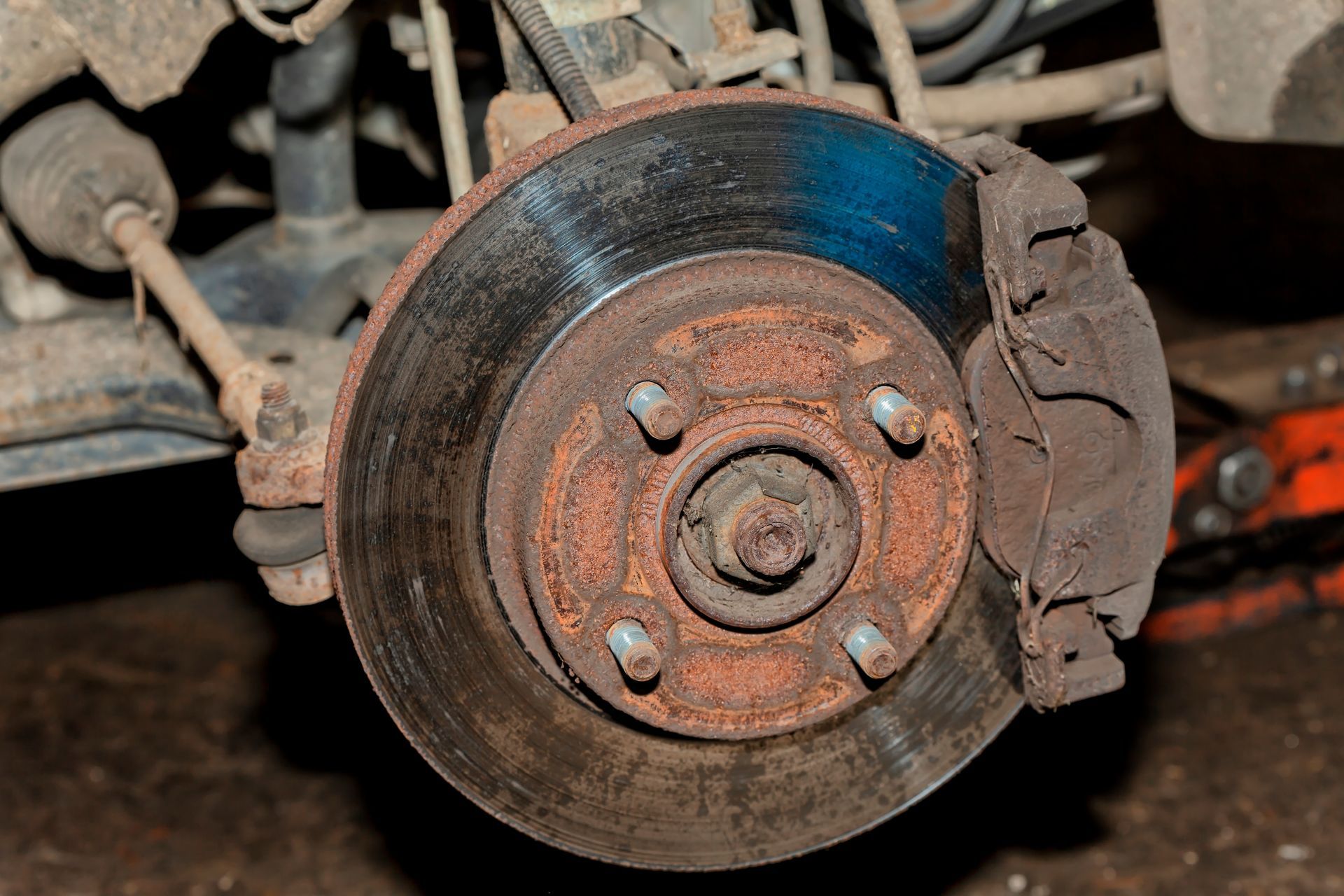
Rotors are the metal discs the pads press against. They deal with heat every time the brakes are applied. During a road trip, that heat can build quickly in traffic, on long descents, or during repeated stops from highway speeds.
A worn or uneven rotor can cause vibration, pulsing, scraping, or steering wheel shake when braking. Some drivers first notice it while slowing down from higher speeds, because that is when the rotor problem becomes harder to ignore.
Rotors also have minimum thickness limits. If they are too thin, rusty, grooved, or heat-spotted, new pads alone may not give the braking feel you want on a long drive. Pads and rotors need to be judged together.
Brake Fluid Can Be Old Even If The Pedal Feels Fine
Brake fluid is part of the hydraulic system, so it is easy to forget. The pedal may feel normal during daily driving while the fluid is slowly absorbing moisture. That moisture lowers the fluid’s ability to handle heat.
On a road trip, the brakes may get hotter than they do during normal errands. If the brake fluid is old or contaminated, the pedal can start feeling softer after repeated braking. That is not something you want to discover on a busy highway exit or a downhill stretch.
Brake fluid should be checked for condition, level, and service history. Low fluid also needs attention because it can point toward worn pads or a leak. Topping it off without finding the reason is not a real fix.
Road Trip Brake Warning Signs To Notice Early
Your brakes usually give clues before they become unsafe. Pay attention to these signs before a long drive:
A squeal when slowing down can indicate that the wear indicator is touching the rotor, but it can also point to hardware, pad material, rust, or uneven contact that should be checked.
A grinding sound is more serious because it can mean pad material is gone, or a brake part is contacting the rotor in a way that can cause quick damage.
A steering wheel shake while braking from highway speed often points toward rotor surface problems, uneven pad transfer, or front-end wear that becomes more noticeable under braking.
A brake pedal that feels lower, softer, or less confident than usual can be due to old fluid, air in the system, leaks, hoses, calipers, or master cylinder issues.
A vehicle that pulls while braking may have uneven brake force from side to side, a sticking caliper, a tire issue, or suspension wear affecting how the vehicle responds.
A hot smell near one wheel after driving can suggest a dragging brake, which can overheat pads and rotors even when you are not pressing the pedal.
Each of these deserves a closer look before the trip, not after you have already packed the trunk.
Loaded Vehicles Ask More From The Brakes
A road trip usually means more weight. Passengers, luggage, coolers, bikes, roof boxes, camping gear, and pets all add load. More weight means the brakes have to convert more energy into heat every time the vehicle slows down.
That extra demand can expose weak parts. A brake system that feels acceptable with one driver may feel different with the whole family inside and luggage in the back. The stopping distance can increase, and the brakes may feel warmer after repeated stops.
Tires also matter here. Brakes slow the wheels, but tires grip the road. If the tires are worn, underinflated, or unevenly worn, the best brake parts in the world still have less grip to work with.
Calipers, Hoses, And Hardware Should Not Be Ignored
Brake pads and rotors get the attention, but the smaller parts decide how well the brakes apply and release. Calipers need to move correctly. Slide pins need to glide. Hoses need to carry pressure without swelling or restricting flow. Clips and hardware must hold the pads in place.
A sticking caliper can wear one pad faster, create a burning smell, drag the vehicle down, and overheat one wheel. A restricted hose can cause a brake to release slowly. Rusty hardware can cause pads to bind instead of moving smoothly.
Regular maintenance helps catch these problems before they damage fresh pads and rotors. A good brake check should include the parts that make the system move, not only the parts that are worn down.
Do Not Wait Until The Night Before The Trip
Brake work is easier to plan when there is time. If the brakes need pads, rotors, fluid service, caliper work, or related repairs, it is better to know early. That also gives you a chance to drive the vehicle after service and make sure everything feels right before leaving town.
A last-minute brake concern creates stress. A road trip should not start with a mystery squeal or a pedal that feels different. If the brakes have been noisy, vibrating, pulling, or feeling weaker, get them checked before setting the route and packing the bags.
Get Summer Road Trip Brake Service In Dieppe, NB, With JP's Garage
If you are planning a summer road trip, JP's Garage in Dieppe, NB, can check your brake pads, rotors, fluid, calipers, hoses, hardware, and related parts before you leave.
For brake service that helps your vehicle feel ready for the miles ahead,
contact us to schedule an appointment.