Diesel problems can be tricky because the truck or vehicle may keep running even as components start to fail. It might still start, still pull, and still get through the day, but the signs are there if you know what to watch for. A little extra smoke, a harder start, or a loss of power under load can all point to a repair that should not wait.
Injectors, turbochargers, and glow plugs are three common areas that create diesel complaints. They affect the engine in different ways, but the symptoms can overlap enough that proper testing matters.
Why Diesel Symptoms Need Careful Diagnosis
Diesel engines depend on high pressure, correct timing, strong compression, clean fuel, and steady airflow. When one system is off, the engine can run rough, lose power, smoke, or become harder to start. The problem is that several parts can create similar symptoms.
That is why our technicians do not treat every hard start or power loss as the same repair. A weak injector, boost leak, turbo issue, glow plug fault, or fuel supply problem can all make a diesel feel different. The right repair starts with finding which system is actually falling behind.
Hard Starting Can Point To Glow Plug Problems
Glow plugs help warm the combustion chamber so a diesel engine can start properly, especially when the engine is cold. If one or more glow plugs fail, the engine may crank longer, stumble after startup, or produce white smoke for a short time. Cold weather can make the problem much more obvious.
Glow plug issues are sometimes mistaken for battery or starter trouble because the driver hears longer cranking first. Those parts should still be checked, but a diesel that cranks well and struggles to fire may have a preheating problem. The glow plug relay, wiring, and control system also need attention, not just the plugs themselves.
Injector Trouble Can Cause Rough Running And Smoke
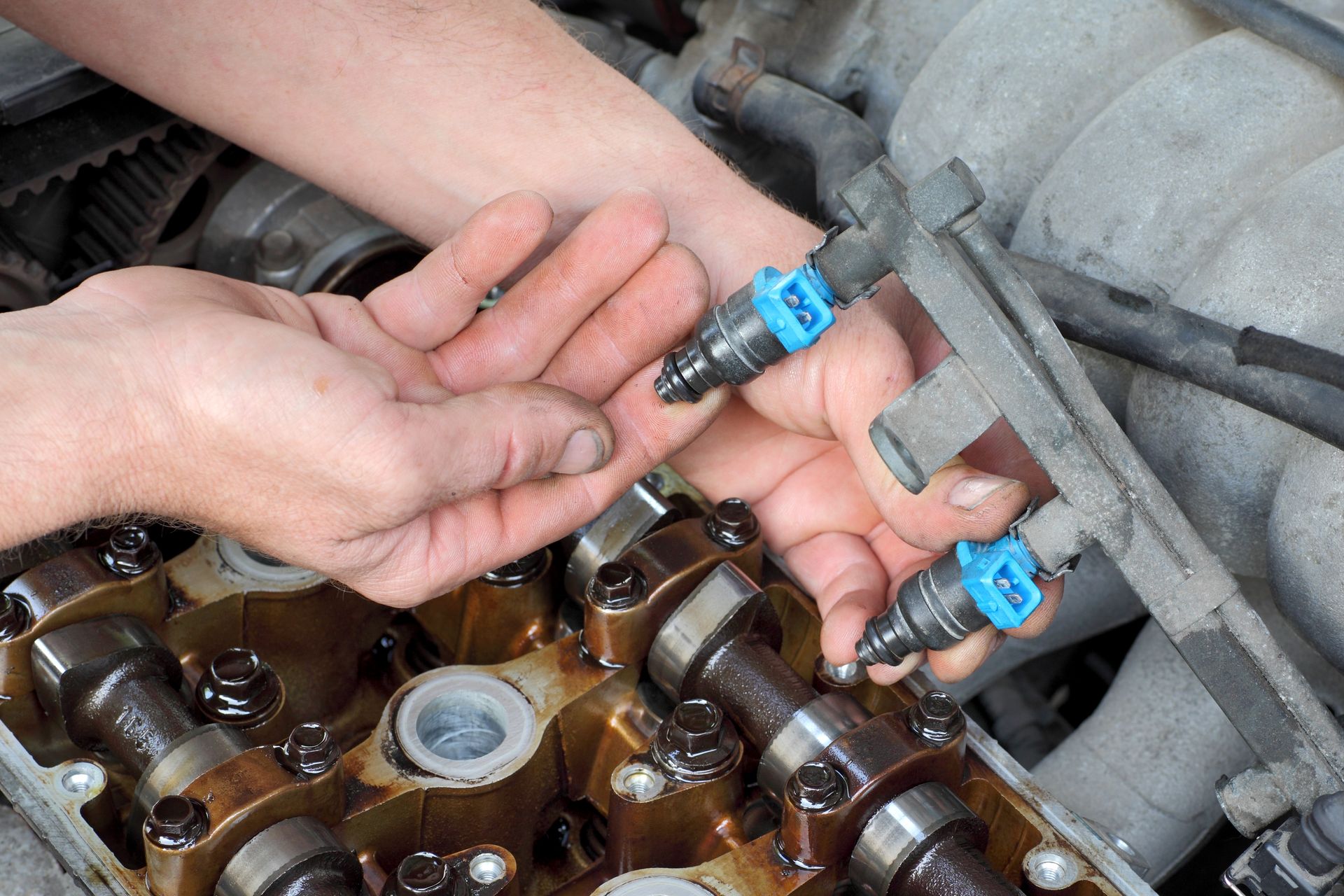
Fuel injectors have to deliver the right amount of fuel at the right time. When an injector sticks, leaks, clogs, or sprays poorly, the engine may idle roughly, knock, smoke, lose fuel economy, or feel uneven under acceleration. A bad injector can also make one cylinder run hotter or dirtier than the others.
Black smoke can point toward too much fuel or not enough air. White smoke can occur when the fuel is not burning properly. A strong fuel smell, rough idle, or fuel dilution in the oil can also raise concern. If injector problems are ignored, they can affect pistons, emissions parts, and overall engine life.
Turbo Issues Usually Show Up Under Load
A turbocharger helps a diesel engine produce more power by forcing more air into the engine. When the turbo system is not working correctly, the vehicle may feel weak when towing, climbing hills, or accelerating onto the highway. Around-town driving might still feel acceptable, which is why turbo issues can go unnoticed at first.
The turbo itself can wear, but the problem can also come from boost leaks, cracked hoses, loose clamps, a failing actuator, sensor faults, or exhaust restrictions. A whining sound, oil around charge pipes, low boost codes, or heavy smoke under acceleration can all point toward the air side of the engine needing an inspection.
Smoke Color Gives Useful Clues
Exhaust smoke is one of the best early clues in diesel repair, though it does not tell the whole story on its own. Black smoke usually means the engine is getting too much fuel, not enough air, or both. That can involve injectors, turbo boost, air filters, sensors, or EGR-related issues.
White smoke often points to fuel that is not burning cleanly, especially during startup. Glow plug issues, injector problems, low compression, or coolant entering the combustion chamber can all be involved. Blue smoke points more toward oil burning, which turbo seals, engine wear, or crankcase ventilation problems could cause. We should always match smoke with testing before blaming any major part.
Loss Of Power Should Not Be Ignored
Diesel power loss can come on gradually. The vehicle may still move fine unloaded, then struggle when it has to work. That difference matters because diesel engines are often used for towing, hauling, and longer driving. A minor power issue can become much more apparent under load.
Low fuel pressure, dirty fuel filters, injector wear, turbo problems, boost leaks, exhaust restrictions, and sensor faults can all reduce power. Regular maintenance helps prevent some of these issues, especially fuel filter problems and air restriction, but any noticeable change in pulling power deserves a closer look.
Warning Lights And Codes Need More Than A Scan
Modern diesel vehicles store useful fault codes, but a code is only a starting point. A low boost code does not always indicate a bad turbo. An injector balance issue does not always mean the injector is the only problem. A glow plug code may involve wiring or a control module.
We use scan data, visual checks, fuel pressure information, airflow readings, and hands-on testing to connect the symptom to the cause. That process is what keeps a repair from turning into a parts list. Diesel systems are too expensive to diagnose by assumption.
Get Diesel Repair In Dieppe, NB, With JP's Garage
If your diesel is hard to start, losing power, smoking, running rough, or showing warning lights, JP's Garage in Dieppe, NB, can inspect the injector, turbo, glow plug, and fuel systems to find the cause.
Bring it in before a small diesel symptom turns into poor performance, downtime, or a larger repair.